
Performance Spirituality vs True Living
At first, it feels noble. You meditate daily. You read sacred texts. You track your habits. You optimize your mornings.
However, something begins to tighten inside. Growth turns into pressure. Practice becomes performance.
Performance spirituality vs true living is not an abstract debate. It is a lived tension. One path measures progress. The other dissolves measurement. One path builds an image. The other strips it away.
Many seekers begin with sincerity. Yet over time, the search itself becomes exhausting. Instead of freedom, there is subtle strain. Instead of peace, there is comparison.
This article explores seven hidden costs of choosing performance over presence. Not to criticize discipline. Not to dismiss devotion. Rather, to expose where striving quietly replaces being.

What Is Performance Spirituality?
Performance spirituality is the habit of turning inner life into a project.
Practice becomes something to achieve. Growth becomes something to display. Even humility can become an identity.
Metrics sneak in. How long did you meditate? How pure is your diet? How regulated is your nervous system? The invisible becomes measurable. The sacred becomes optimized.
Gradually, effort replaces ease. Self-observation becomes self-surveillance. Every emotion is analyzed. Every setback is labeled as regression.
Although it looks disciplined, the inner atmosphere feels tight. There is little room for imperfection. Rest feels suspicious. Doubt feels like failure.
Over time, the path that promised liberation becomes another arena of self-improvement.

What True Living Actually Feels Like
True living is quieter.
There is no scoreboard. There is no spiritual résumé. Presence matters more than performance.
Instead of chasing transcendence, attention returns to the body. Breathing slows. Movements soften. Emotions are allowed.
True living does not abandon practice. It simply removes urgency. Growth happens indirectly. Insight arises naturally.
Ordinary moments regain dignity. Washing dishes feels complete. Walking outside feels sufficient. Silence does not demand productivity.
Where performance tightens, true living opens.

Hidden Cost #1 — Chronic Inner Pressure
The first cost is subtle pressure.
Even during rest, there is improvement in the background. Thoughts whisper that you could be doing more. You could be evolving faster.
Because of this, relaxation never fully lands. The nervous system stays slightly alert. Spirituality becomes another standard to uphold.
Eventually, fatigue appears. However, it is interpreted as weakness rather than overload.

Hidden Cost #2 — Spiritual Comparison
Comparison infiltrates quietly.
Someone meditates longer. Someone appears calmer. Someone shares mystical experiences online.
Therefore, doubt grows. Am I behind? Am I missing something?
Performance spirituality vs true living becomes visible here. One compares. The other trusts timing.
When comparison dominates, authenticity fades. The path shifts from inner listening to outer validation.
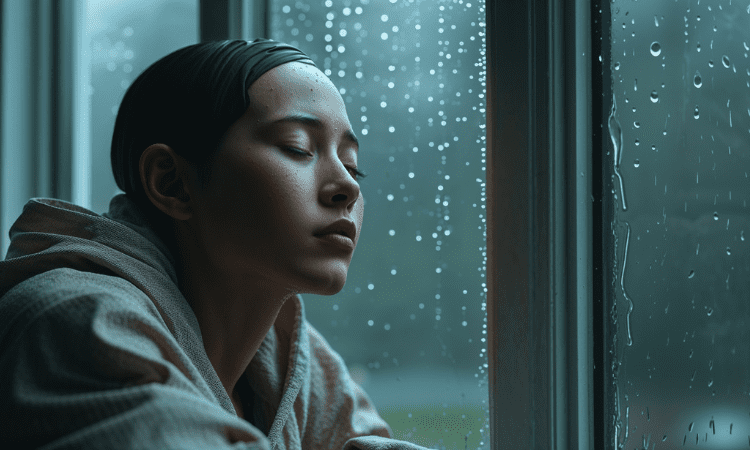
Hidden Cost #3 — Emotional Bypassing
Pain becomes inconvenient.
Anger is reframed too quickly. Grief is spiritualized instead of felt. Sadness is labeled as low vibration.
Although this looks elevated, it creates fragmentation. Emotions suppressed do not disappear. They accumulate.
Sooner or later, they surface as exhaustion or numbness.
Hidden Cost #4 — Identity Attachment
A new identity forms: the spiritual one.
This role feels meaningful. It feels elevated. Yet it becomes fragile.
If the identity cracks, fear arises. What if I am not as awake as I thought? What if I am ordinary?
True living tolerates ordinariness. Performance resists it.
Attachment to image keeps the nervous system braced.

Hidden Cost #5 — Nervous System Fatigue
Constant self-regulation exhausts the body.
Over-meditation. Excessive breathwork. Endless introspection.
Although each tool has value, overuse creates strain. The body cannot sustain perpetual optimization.
Eventually, symptoms emerge: irritability, brain fog, sleep disruption. What looked like dedication reveals depletion.

Hidden Cost #6 — Loss of Ordinary Joy
Life becomes serious.
Every moment is interpreted. Every event carries spiritual meaning.
However, simple laughter fades. Spontaneity shrinks. The present moment becomes material for growth rather than something to enjoy.
True living restores lightness. It allows meaning without forcing it.

Hidden Cost #7 — Disconnection from the True Self
The deepest cost is subtle disconnection.
When effort dominates, authenticity weakens. Actions align with ideals rather than inner truth.
Over time, intuition quiets. The body’s signals are overridden.
Performance spirituality vs true living reaches its turning point here. One path strains toward becoming. The other relaxes into being.

The Shift From Performance to True Living
The shift is not dramatic. It is gentle.
Reduce intensity. Shorten practices. Allow boredom. Welcome doubt.
Instead of asking, “How am I progressing?” ask, “How do I feel right now?”
Return to the body. Eat slowly. Walk without tracking steps. Sit without measuring minutes.
Gradually, tension dissolves. Practice becomes supportive rather than demanding.
Presence replaces performance.
Conclusion Performance Spirituality vs True Living
The spiritual path was never meant to become another competition.
Discipline has value. Structure has purpose. Yet when striving overrides simplicity, exhaustion follows.
Performance spirituality vs true living is ultimately a choice between pressure and presence.
True living does not require constant improvement. It asks for honesty. It asks for embodiment. It asks for permission to be ordinary.
And in that ordinariness, something deeper emerges.

FAQ Performance Spirituality vs True Living
What is performance spirituality?
Performance spirituality is the tendency to turn spiritual practice into self-optimization, where growth becomes measurable and identity-driven rather than embodied and natural.
How is true living different from performance spirituality?
True living emphasizes presence, simplicity, and authenticity. It removes comparison and pressure while keeping practices supportive rather than demanding.
Can spiritual practice cause burnout?
Yes. When practices are excessive, identity-based, or driven by comparison, they can strain the nervous system and lead to spiritual exhaustion.
How do I shift from performance to presence?
Reduce intensity. Shorten structured routines. Focus on embodied awareness instead of progress tracking. Simplicity restores balance.