
Spiritual Doubt
Spiritual doubt does not always arrive as a crisis. Sometimes it enters quietly, without confrontation or collapse, softening the certainty that once felt stable beneath daily life. Beliefs that used to offer direction lose their immediacy. Practices that once grounded the inner world begin to feel distant. Nothing breaks, yet something essential shifts, creating a subtle sense of disorientation that is difficult to name.
What makes spiritual doubt especially unsettling is its gentleness. There is no rebellion against what came before, no urgency to replace old meanings with new ones. Instead, there is a pause where answers once lived. Life continues outwardly unchanged, while inwardly the familiar compass no longer points clearly. The absence of clarity is not dramatic enough to demand attention, yet persistent enough to quietly reshape how everything is experienced.
This opening marks the beginning of a journey that does not rush toward resolution. It is a movement through uncertainty without the promise of insight, a willingness to stay present with questions that resist answers. What follows is not a search for certainty, but an honest account of living within the space that doubt creates.
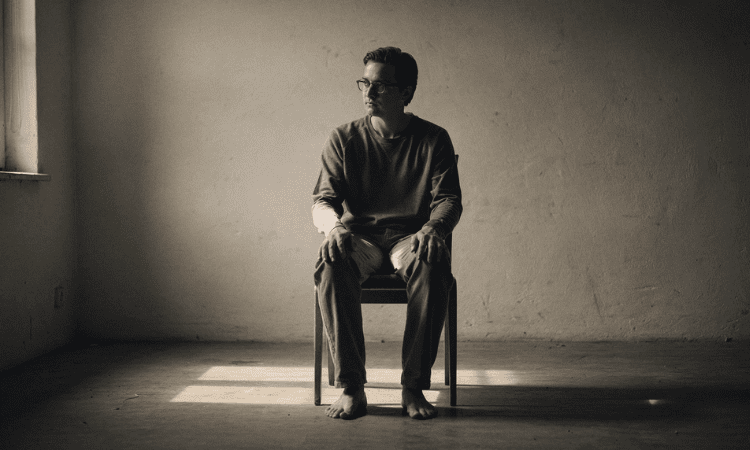
Continuing Life While Questioning Everything
Outwardly, nothing appeared different. Mornings still arrived with the same light through the window. Conversations unfolded as they always had. Responsibilities were met, plans were made, and routines continued to hold their shape. To anyone watching from the outside, life seemed intact and steady. Yet beneath that surface continuity, spiritual doubt lingered quietly, altering how each moment was felt rather than how it was lived.
There was a growing awareness of moving through days on a kind of autopilot. Actions happened without resistance, but also without the depth of engagement that once made them feel meaningful. Laughter still came, though it faded quickly. Achievements were acknowledged, but they no longer carried the same satisfaction. Even rest felt incomplete, as if something essential remained unresolved in the background.
What made this phase particularly disorienting was the lack of visible disruption. Nothing demanded change. There was no clear reason to stop, to explain, or to step away. And so life continued forward, carried by habit and expectation, while an unspoken questioning unfolded quietly within. It was possible to participate fully in the world while feeling only partially present in oneself.
This coexistence of normalcy and uncertainty created a subtle tension. The external world moved at its usual pace, while the inner world slowed, pausing often, listening for something that did not arrive. In that gap between movement and meaning, a new awareness began to form—not yet clarity, but a recognition that the journey had shifted into unfamiliar territory.
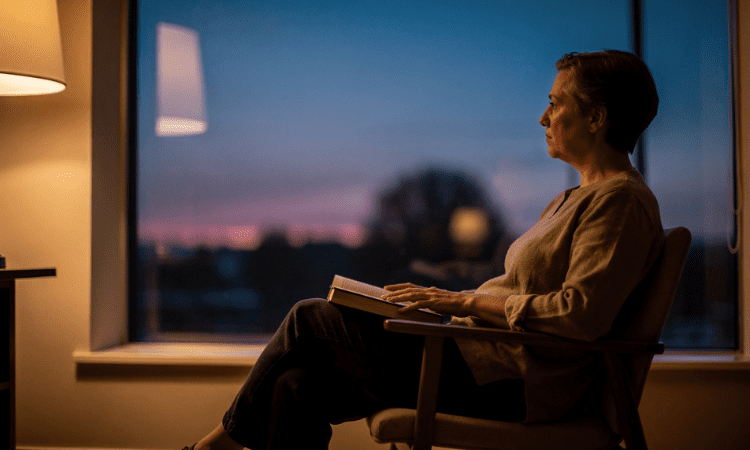
Doubt That Doesn’t Want Answers
This questioning did not arrive with urgency. There was no demand for solutions, no pressure to replace what had been lost. Instead, uncertainty settled in gently, almost patiently, as if it had no interest in being resolved. Spiritual doubt existed not as a problem to be solved, but as a condition to be lived with, reshaping perception without announcing its purpose.
Unlike the sharp doubt that challenges belief head-on, this version felt soft and spacious. It did not argue with former convictions or attempt to dismantle them. It simply loosened their grip. What once felt solid became porous. Meaning no longer insisted on being understood. The need to explain or justify inner experience slowly receded, replaced by a quiet acceptance of not knowing.
There was something strangely honest in this state. Without answers to lean on, attention turned toward what was actually present. Sensations, moments, and small shifts in awareness began to matter more than interpretations. The absence of certainty created room for a different kind of listening, one that did not rush to conclusions or seek reassurance.
In this way, uncertainty stopped feeling like an enemy. It became a backdrop, subtle but constant, against which life continued to unfold. Not everything needed to make sense. Not every question required an answer. And within that realization, a quieter form of presence began to take shape.

The Loneliness of Questioning in Silence
As uncertainty settled in, a quieter challenge emerged alongside it: isolation. Not the absence of people, but the absence of shared language. Conversations about faith or meaning began to feel strangely distant, as though everyone else was speaking from a script that no longer applied. Spiritual doubt carried a solitude that was difficult to explain without sounding dismissive or lost.
There was a growing awareness of standing apart, even in familiar spaces. Group discussions felt rehearsed. Expressions of certainty sounded well-intended but oddly unreachable. It became easier to listen than to speak, to nod rather than to share what was actually unfolding inside. The experience did not invite debate or explanation. It asked for privacy, even when connection was desired.
This silence was not chosen deliberately. It emerged from the recognition that some inner states resist translation. Words felt insufficient, and attempts to describe the uncertainty often flattened its nuance. And so the questioning remained largely unspoken, held quietly within, shaping perspective without external validation.
Yet within this solitude, something subtle shifted. The lack of shared certainty created space for deeper honesty with oneself. Without the need to align with familiar narratives, attention turned inward, not in search of answers, but in acknowledgment of what was present. The loneliness remained, but it softened into a quieter form of companionship—one rooted in self-awareness rather than belonging.

Searching for Meaning Without Relief
Eventually, the urge to understand returned, though without much confidence. There was a quiet hope that clarity might reappear if approached gently enough. Old books were reopened. Familiar passages were reread, not with expectation, but with curiosity. Practices that once offered grounding were revisited, not to reclaim certainty, but to see whether something might stir again. Yet each attempt ended the same way—nothing resisted, and nothing resolved.
Spiritual doubt lingered through these efforts, untouched by seeking. Reflection brought awareness but no conclusion. Insight appeared briefly, only to dissolve before it could settle. The absence of relief was not discouraging so much as revealing. It suggested that understanding was not what was being asked for, at least not yet.
There was a growing realization that meaning could not be forced back into place. Searching itself had become part of the experience, not a pathway out of it. The effort to regain what had been lost quietly shifted into a willingness to stay present with what was unfolding, even if it remained incomplete.
This phase carried its own kind of patience. It asked for endurance without reward, attention without payoff. And within that sustained presence, the relationship with uncertainty began to change—not through resolution, but through familiarity.

When the Body Carries the Uncertainty
As the questioning continued, its presence became less mental and more physical. Thoughts still came and went, but the body began to register what the mind could not articulate. There was a heaviness that settled in the chest during quiet moments, a subtle tightening that appeared without warning. Breathing felt shallower at times, as if the body was holding something unresolved beneath awareness.
Spiritual doubt revealed itself through sensation rather than thought. Restlessness appeared in moments meant for rest. Fatigue lingered even after sleep. Simple tasks required more effort than before, not because they were difficult, but because the body seemed to be carrying an unnamed weight. These sensations were not dramatic enough to demand attention, yet persistent enough to become familiar companions.
Listening to the body did not bring clarity, but it offered information of a different kind. The discomfort was not asking to be fixed or analyzed. It was asking to be acknowledged. In noticing these sensations without judgment, a subtle shift occurred. The experience of uncertainty moved from something abstract into something lived, grounded in breath and posture rather than belief.
This awareness did not resolve the questions, but it changed the way they were held. The body became a place of contact, a reminder that even without answers, presence was still possible. And in that presence, the journey continued—slower, heavier, but more honest than before.

Letting Go of the Need to Resolve Doubt
At some point, the effort to make sense of everything began to loosen on its own. Not because clarity arrived, but because the constant attempt to understand grew tiring. There was a quiet recognition that nothing needed to be decided immediately. The questions did not require answers in order for life to continue. They could exist without being solved.
Spiritual doubt was no longer something to push against or escape from. It became something that could be allowed, present without resistance. This shift did not bring relief in the traditional sense. Instead, it brought a softer relationship with uncertainty. The need to explain, justify, or interpret each inner movement gradually faded, replaced by a willingness to stay with experience as it was.
In this release, silence took on a different quality. It was no longer an absence demanding meaning, but a space that could be inhabited without expectation. Moments of not knowing became less threatening. The pressure to reach a conclusion eased, making room for a quieter kind of honesty.
Letting go did not change the journey’s direction, but it changed how each step was taken. Without the urgency to resolve doubt, movement became slower and more attentive. The path remained unclear, yet it no longer felt necessary to illuminate it all at once.

Trust Without Belief
Something subtle began to shift, though it did not announce itself as change. There was no renewed certainty, no return of familiar convictions. What emerged instead was a quieter form of steadiness. Moments started to feel more inhabitable, even without explanation. Sitting in silence no longer carried the same weight. Walking, breathing, noticing small details became enough, not because they solved anything, but because they grounded attention in what was real.
This trust did not depend on belief systems or frameworks. It arose from immediacy. From the simple fact of being present without needing to interpret the experience. There was a growing sense that not everything required meaning in order to be lived. The absence of answers no longer felt like a failure, but like an open field where attention could rest.
Only later did it become clear that spiritual doubt had not disappeared. It had softened its grip. Instead of dominating perception, it became one element among many. It no longer defined every moment. It existed alongside curiosity, alongside stillness, alongside the ordinary textures of daily life.
This form of trust was fragile but honest. It did not promise direction or insight. It offered something quieter: permission to be where one was, without the need to resolve the journey before continuing it.

Walking Forward Without Conclusions
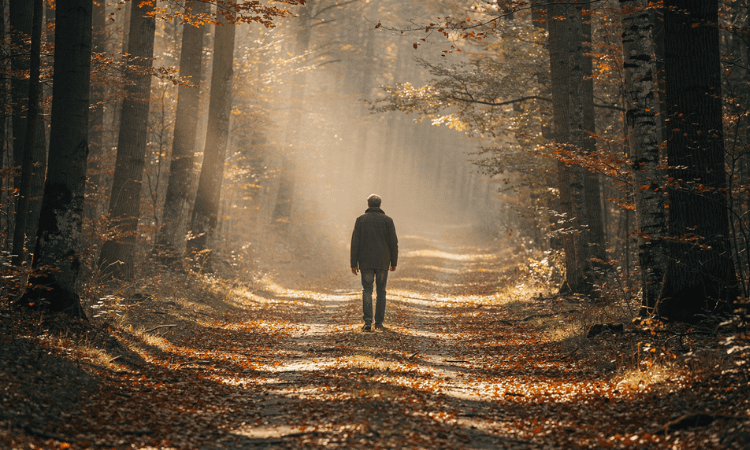
There was no moment where everything came together. No final insight that suddenly made the uncertainty worthwhile. What remained instead was movement. Life continued, not because answers were found, but because standing still no longer felt necessary. Each step forward carried less urgency, less demand for explanation.
The path was still unclear, but it no longer felt hostile. Not knowing became part of the terrain rather than an obstacle to overcome. Days unfolded with more patience. Attention rested more often in the present moment, even when questions lingered in the background. The absence of certainty no longer defined the experience.
Spiritual doubt did not vanish at the end of this journey. It remained, quieter now, woven into daily life rather than standing at its center. And it no longer demanded resolution. It simply existed, reminding that growth does not always move toward clarity, and meaning does not always arrive in words.
What mattered most was not where the journey led, but how it was being walked. Slower. More honestly. Without the pressure to arrive anywhere in particular. And in that way of moving forward, something unexpected emerged—not answers, but a deeper willingness to stay present with whatever came next.
FAQ Spiritual Doubt
Is doubt a sign of failure or weakness?
No. Periods of questioning often arise when earlier ways of understanding life no longer fit. This can reflect honesty, maturity, or a deepening relationship with oneself rather than weakness.
Does questioning mean losing faith completely?
Not necessarily. Many people continue their inner path while allowing beliefs to loosen or change. Questioning does not automatically lead to rejection or abandonment of spirituality.
How long can a season of uncertainty last?
There is no fixed timeline. For some, it passes quietly. For others, it becomes an ongoing companion that reshapes how meaning, trust, and presence are experienced.
Should uncertainty be solved or resolved?
Not always. Trying to resolve it too quickly can create pressure. In many cases, allowing uncertainty to exist without forcing clarity supports deeper integration.
Can peace exist without answers?
Yes. Many people find that peace returns not through certainty, but through acceptance—by learning to stay present even when answers do not arrive.
1 thought on “Spiritual Doubt: A Quiet Journey Without Answers”