
Discover Your True Self
There comes a moment in every inner journey when the old habits, the old patterns, the old identities, and the old stories fall away like dried leaves shaken loose by a quiet wind. At first, you may not recognize what is happening. You may not realize that the heaviness you feel is the weight of outgrown selves dissolving.
You may not understand why the things that used to inspire you feel suddenly flat or distant. But this moment, when everything familiar starts to feel too small, is often the exact beginning of the path where you finally discover your true self. It rarely arrives with fireworks. It comes softly, like a whisper from a deeper part of your being asking you to pause, to listen, to return.

At the center of this transformation lies one truth: you cannot discover your true self by racing. You cannot meet your deepest nature by outrunning your emotions or by filling your days with rituals that distract you from what is asking to be seen. You cannot uncover clarity by tightening your grip on control. You discover your true self by loosening what no longer fits, by breathing into the parts of you that have gone numb, by recognizing the difference between who you were told to be and who you actually are. This article offers a grounded approach to that process, not through grand gestures but through powerful daily practices that reveal your inner truth one gentle layer at a time.
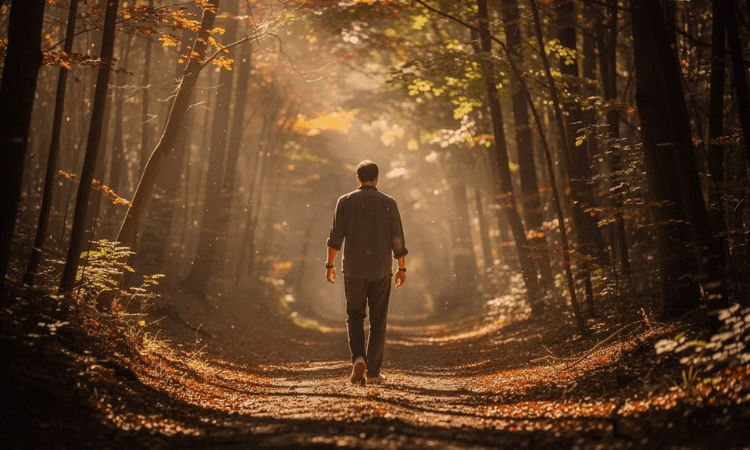
Every spiritual awakening begins with returning to the body. It is in the body that stories accumulate. It is in the body that memories hide. It is in the body that the quiet voice of intuition first makes itself known. When you explore the body with patience, you discover your true self as something not conceptual or intellectual but living. Imagine placing your hand on your chest each morning with the intention not to calm yourself but simply to make contact with your own aliveness. At first it feels strange to practice such simplicity. But over time, this one gesture becomes the anchor that brings you back home. By noticing how your breath rises and falls beneath your palm, you feel the truth of your existence beyond identity, beyond expectation, beyond performance. That moment is the beginning of discovering your true self.

As you deepen this practice, you begin noticing the difference between the mind’s voice and the body’s truth. The mind carries the noise of the world. It repeats opinions that are not your own, beliefs you inherited unconsciously, and fears you absorbed from environments that never knew who you truly were. The body, however, does not lie. It tightens in the presence of falsehood. It softens when something is real. It contracts around people who drain your spirit and expands around those who honor your essence.
When you breathe deeply and listen to these subtle shifts, you discover your true self not as a concept but as a felt experience. You learn which spaces nourish you and which ones starve you. You learn which relationships awaken you and which ones bury you. You learn which habits align with your nature and which ones distort it. This level of awareness becomes one of the most powerful daily practices you can cultivate.

Another essential practice is the art of honest stillness. Stillness has a way of revealing what movement hides. When you allow yourself even ten minutes each day to sit without agenda, without technique, without striving for enlightenment, you create a space where truth can rise naturally. Many people fear stillness because they assume it will expose their brokenness. But stillness does not show what is broken; it shows what is real. And what is real is often softer, quieter, and more forgiving than the mind expects. When you breathe into that stillness, you discover your true self as spaciousness rather than tension. You learn that your worth is not tied to productivity or spiritual performance. You learn that your life does not need to be impressive to be meaningful.

Silence becomes a teacher in its own right. When you give yourself permission to spend part of the day without external noise, you begin to hear the internal currents that shape you. There is a moment when the silence becomes less intimidating and more intimate. Your thoughts slow, your breath steadies, your inner landscape shifts from chaos to clarity. In these pockets of quiet, you begin to discover your true self as someone whose presence is naturally enough. You no longer chase mystical experiences to validate your growth. Instead, you find depth in the ordinariness of the moment, in the sensation of air entering your lungs, in the texture of sunlight on your skin, in the gentle rhythm of your footsteps.

One of the most powerful daily practices is learning to tell the truth about what you feel. Emotional honesty is a gateway. Most people live their entire lives reshaping their emotions to match what is socially acceptable or spiritually approved. They avoid anger, numb sadness, repress fear, and mask vulnerability. But each time you silence an emotion, you silence a part of yourself. Your true self cannot emerge in an environment where truth is unwelcome. When you give yourself permission to name what is real—without shame and without judgment—you discover your true self as someone worthy of compassion, someone whose inner experience matters. This daily practice of honesty slowly dissolves the layers of defense that kept you disconnected, allowing you to access deeper clarity and strength.
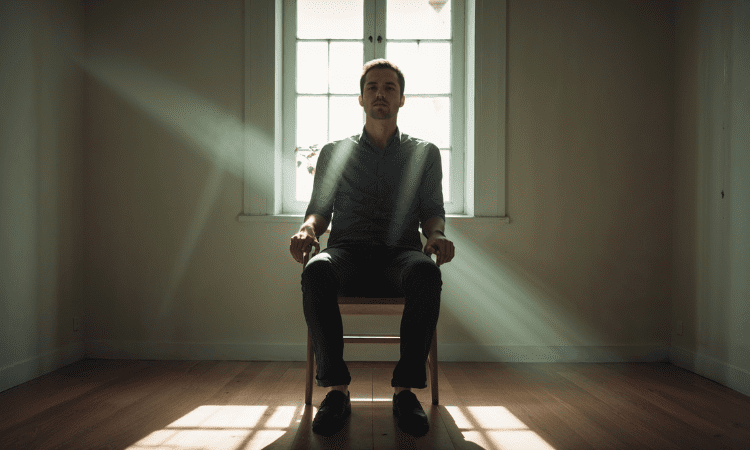
Journaling becomes a companion in this process. Not the kind of journaling filled with polished reflections or inspirational affirmations, but raw, unfiltered expression. When you write without censoring what comes through, you uncover thoughts you didn’t realize you were carrying. You see patterns you’ve been repeating unconsciously. You witness your own contradictions, desires, fears, and longings. Over time, these pages become a map of your inner world, a record of your spiritual renewal. The simple act of writing each day helps you discover your true self by giving shape to the emotions and stories that have been living inside you without language.

Nature plays an equally vital role. There is something about stepping into sunlight, touching the bark of an old tree, listening to the distant hum of flowing water, or feeling wind brush across your cheek that reconnects you to your original self. Nature does not demand anything from you. It does not ask you to be wise, enlightened, or healed. It welcomes you exactly as you are. When you walk through a forest path or rest your hands on warm earth, you discover your true self as part of something larger, something ancient and alive. You feel your edges soften. You feel your breath deepen. You feel your mind quiet. Nature teaches you that you are not separate from life; you are life moved into form.

Another powerful practice is simplifying your spiritual expectations. Many people exhaust themselves by trying to do spirituality perfectly. They read endlessly, meditate obsessively, chase transcendence, and measure their progress against imaginary standards. But the truth is that your true self is not buried beneath complexity. It is buried beneath pressure. When you release the pressure to be perfect, spiritual or otherwise, you discover your true self as someone who does not need to perform worthiness. You feel a lightness return to your being. You feel space inside yourself that you forgot existed.

Tiny daily resets help reinforce this clarity. Pausing before reacting. Breathing before replying. Stepping outside for one minute of sky. Drinking water with intention. Sitting in silence for thirty seconds. These are not small practices; they are anchor points. Each one pulls you back into your center. Each one helps you discover your true self in real-time rather than through distant goals. Over days and weeks, these resets become a lifestyle rather than a technique. They create a rhythm that keeps you connected to your essence even during stress or emotional turbulence.

Relationships offer another mirror. The people who feel safe, the people who see you, the people who allow your softness to exist—these are the relationships that help you discover your true self. When you spend time with people who accept your realness rather than your performance, your nervous system settles. You feel fully alive in their presence.
This feeling of authenticity becomes a guide. It teaches you how you want to show up in the world and what you can no longer tolerate. You begin to let go of relationships built on pleasing, and you make space for relationships built on truth. This shift is not easy, but it is essential. You cannot discover your true self while still performing for people who only know a version of you that was shaped by survival rather than authenticity.

Creativity becomes a doorway as well. You do not need to be an artist to access this. Creativity lives in the way you arrange your morning, the way you speak your truth, the way you move your body, the way you solve problems. Creativity is not a skill but a state of being. When you allow yourself to play, to experiment, to craft something without needing it to be perfect, you discover your true self as someone capable of joy. You reconnect with curiosity. You rekindle wonder. You awaken the part of you that knows how to make beauty out of ordinary moments.
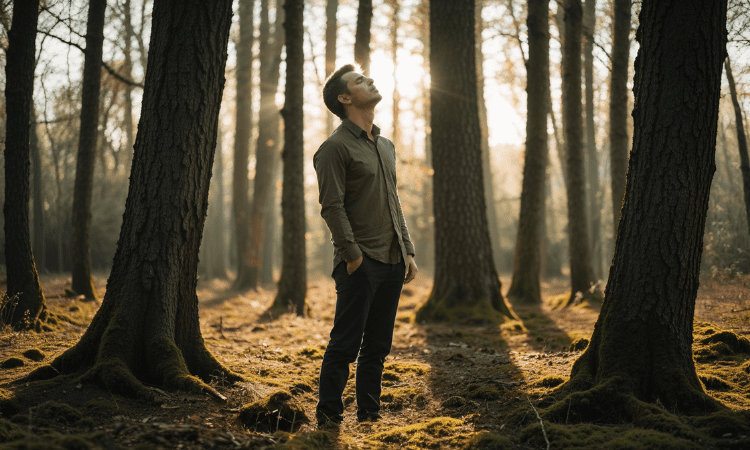
The final and perhaps most transformative practice is learning to sit with discomfort. Discomfort is not a punishment; it is a doorway. Every time discomfort arises, it signals that something inside you is ready to be seen. Instead of distracting yourself, escaping into habits, or spiritually bypassing emotion, you choose to remain present. You breathe into the sensation. You allow it to expand, to peak, to fade. You learn that discomfort does not kill you. It frees you. With each encounter, you discover your true self not as someone fragile but as someone deeply resilient. You learn that you can face truth and remain whole.

Over time, these daily practices weave themselves into your life. They reveal your essence layer by layer, gently and consistently. You begin waking in the morning with a sense of groundedness rather than dread. You move through your days with presence rather than rushing. You speak more honestly. You choose more wisely. You feel more deeply. You live more fully. And at some point—quietly, almost imperceptibly—you notice that you feel like yourself again. Not the self the world shaped, but the self you were meant to be.

This is the heart of the path. To discover your true self is not to become something new. It is to return to what has always been there beneath fear, beneath noise, beneath expectation. You discover your true self by peeling away the false, by meeting each moment with honesty, by listening to your body, by honoring your emotions, by simplifying your spiritual life, by reconnecting with nature, by nurturing meaningful relationships, and by allowing creativity and discomfort to become guides rather than obstacles.

FAQ of Discover Your True Self
What does it mean to discover your true self?
To discover your true self is to reconnect with your original nature beyond old conditioning, fear, and inherited identity patterns. It is a process of remembering what is real within you.
How long does it take to discover your true self?
There isn’t a set timeline. When you commit to small daily practices, clarity and authenticity return gradually, forming a sustainable spiritual renewal journey.
Why do daily rituals help you discover your true self?
Rituals slow down the nervous system, quiet the mind, and bring presence into the body, which makes it easier to discover your true self through embodied awareness.
Is discovering your true self the same as a spiritual awakening?
They overlap, but discovering your true self is an ongoing process, not a sudden moment. Awakening might happen quickly, but living from your true self is a continuous unfolding.
Can anyone discover their true self?
Yes. The true self never disappears—it only gets covered by stress, roles, beliefs, and emotional defenses. With consistent presence, anyone can discover their true self again.

Discover Your True Self Conclusion
In the end, discovering your true self is less about transformation and more about remembrance. You are not becoming someone else. You are remembering who you already are. You are returning to the essence that has been whispering beneath the noise your entire life.
You are reclaiming yourself from the stories you were told. You are stepping into the clarity that was waiting for you beneath every layer of performance and every moment of distraction. This process is not a dramatic awakening but a gentle homecoming, one breath, one truth, one practice at a time.